Turkey Vows ‘Liberation’ of Jerusalem
Turkish President Recep Tayyip Erdogan has sharply escalated his rhetoric against Israel to the point where military conflict between the two countries is no longer merely a theoretical possibility.

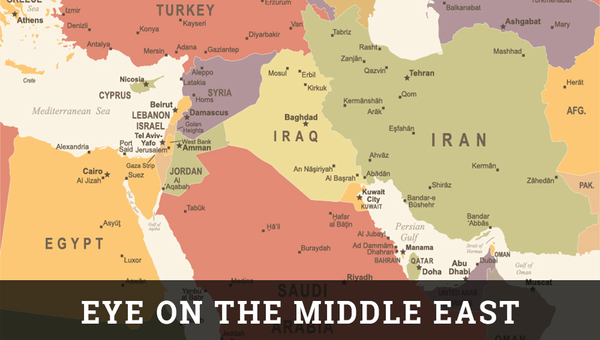
Turkish President Recep Tayyip Erdogan has sharply escalated his rhetoric against Israel to the point where military conflict between the two countries is no longer merely a theoretical possibility.
Turkish Foreign Minister Hakan Fidan recently said that Turkey “may be forced” to acquire nuclear weapons to counterbalance Israel and Iran to prevent them from dominating the Middle East.

Pope Leo XIV began an official visit to Spain by urging Spaniards to embrace multicultural coexistence with Islam and stop “fanning the flames of polarization” over mass migration from the Muslim world.
Expectations were once high that Saudi Arabia would become the next country to join the Abraham Accords, but recent shifts in Saudi foreign policy make normalization with Israel increasingly unlikely in the foreseeable future.

French intelligence services are warning that the Muslim Brotherhood and related Islamist groups are actively infiltrating the country’s public universities with the aim of institutionalizing Islamic practices on secular campuses.

A groundbreaking new report about parallel societies in European cities reveals a close correlation between mass immigration, Islamization, and the emergence of so-called no-go zones.

Germany’s Green Party has introduced into parliament a 24-point plan to secure the “institutional anchoring” of Islam in Germany.

The Dutch Parliament has narrowly approved a motion to ban the Muslim Brotherhood, a transnational Islamist group that seeks to establish a global Islamic Caliphate.

A research survey shows that young Muslims in France are markedly more religious than their parents and exhibit a level of religiosity well above that of other religions.

Across Europe, elected officials, business leaders, school superintendents, sports team owners—even Christian and Jewish clergy—are going out of their way to celebrate Ramadan, the month-long commemoration of the time when Muslims believe the Qur’an was first revealed to Muhammad.

A new report on radicalization in Germany has revealed that nearly half of all Muslims under 40 years of age in the country are sympathetic to Islamism, the belief that all social and political systems should be guided by Islam.
Israel and Lebanon recently held their first direct diplomatic talks in more than three decades. The two countries discussed confidence-building measures aimed at de-escalating tensions in southern Lebanon near their shared border.